5 Pillars Every Adult Should Track on a Preventive Care Checklist
Preventive care checklist for adults: which screenings and vaccines you need, visit prep, and how secure digital records keep it updated.

5 Pillars Every Adult Should Track on a Preventive Care Checklist
A preventive care checklist tracks five things: vaccines, screenings, vitals and labs, routine exams, and your family health history. Together, these five pillars catch problems before symptoms show up, and they change as you age. The lists below break down exactly what’s due at each life stage, so you walk into your next appointment knowing what to ask for.
TL;DR:
- Most adults should get a cholesterol test every four to six years, with more frequent testing if risk factors like diabetes or family heart disease are present.
- Annual flu shots are recommended for everyone aged six months and older, with vaccines like shingles starting at age 50 and pneumococcal at 65 or earlier for certain risks.
- Screenings such as mammograms and colorectal exams typically start at age 40 and 45, but personal risk factors may justify earlier testing.
- Keeping a centralized, HIPAA-compliant medical record helps track vaccine dates, lab results, and screenings, reducing missed or duplicated care.
- Preventive visits usually cover vaccines, cancer screenings, routine labs, and vital checks, but if a health issue arises, billing shifts from preventive to diagnostic, possibly incurring costs.
Table of Contents
- What Should Be On Your Preventive Care Checklist By Age?
- What Actually Happens During a Preventive Visit?
- How Do You Prepare For a Preventive Care Visit?
- When Should Common Screenings Actually Start?
- How Do You Keep Your Preventive Checklist From Falling Apart?
- Does Insurance Actually Cover Preventive Care?
- Turning Your Checklist Into a Plan, Not a One-Time List
- Keep Every Vaccine Date and Lab Result In One Place
- Sources
What Should Be On Your Preventive Care Checklist By Age?
Your checklist looks different at 8 than it does at 68. Here’s what matters at each stage.
Children. Well-child visits track growth, vision, hearing, and developmental milestones at set intervals through age 18. Immunizations follow a fixed schedule from birth through kindergarten, with boosters layered in during adolescence. Dental checkups every six months and a vision screen before first grade round out the basics.
- Well-child visits at recommended intervals through adolescence
- Standard immunization series (measles, polio, DTaP, and others per CDC schedule)
- Developmental and behavioral screening at pediatric checkups
- Dental exams twice yearly; vision screening before school entry
Adolescents. The HPV vaccine works best when given between ages 9 and 12, though it’s approved through 26. Sports physicals are often the only checkup a teenager gets each year, which makes them a good place to slip in a mental health screen. Around 18, start talking with your teen about transitioning to an adult primary care provider instead of a pediatrician.
- HPV vaccine series (ideally started by age 12)
- Annual sports or school physical
- Mental health and depression screening
- Plan for transition to adult primary care around 18
Adults. Annual vitals (blood pressure, weight, BMI) anchor every visit. Cholesterol gets checked every four to six years if you’re average risk, more often if you have diabetes or heart disease in the family. Reproductive health screens, including Pap tests and STI screening, follow their own intervals depending on age and history.
- Blood pressure and BMI check at every visit
- Cholesterol panel every 4 to 6 years (more often with risk factors)
- Diabetes screening starting around age 35, or earlier with risk factors
- Reproductive health screens per provider guidance
Older adults. Bone density scans typically start at 65 for women. Fall-risk assessments and hearing and vision checks become annual instead of occasional. Chronic conditions like hypertension or diabetes usually mean labs every three to six months instead of once a year.
- Bone density (DEXA) scan starting around 65
- Annual fall-risk, hearing, and vision assessment
- More frequent chronic-disease monitoring labs
Pregnancy and well-woman care. Prenatal visits follow a set timeline, monthly through 28 weeks, then more often as delivery nears, with gestational diabetes and blood pressure screens built in. Outside of pregnancy, a well-woman visit once a year covers everything from contraception counseling to breast exams.
What Actually Happens During a Preventive Visit?
A preventive visit isn’t one exam. It’s a bundle of four categories, and knowing them helps you understand what’s routine versus what might need a follow-up appointment.
Vaccines. The flu vaccine is recommended annually for everyone age 6 months and older, no exceptions for healthy adults. Beyond flu, timing gets age-specific: shingles vaccine starts at 50, pneumococcal vaccine typically starts at 65 (or earlier with certain conditions).
- Annual flu shot for ages 6 months and up
- Shingles vaccine starting at 50
- Pneumococcal vaccine starting at 65, or earlier if you have qualifying risk factors
Cancer screenings. Guidelines set anchor ages, but your personal risk can move the timeline earlier. Mammograms typically start around age 40, and colorectal screening generally begins at 45, according to the U.S. Preventive Services Task Force. Lung cancer screening applies to a narrower group: adults 50 to 80 with a heavy smoking history.
Routine labs. A lipid panel, A1c (blood sugar), and kidney function tests make up the core lab trio for most adults. Providers order them based on age, weight, family history, and current medications; someone on blood pressure medication, for instance, often needs kidney function checked more frequently.
Exam components. Blood pressure and BMI get measured at nearly every visit. A basic heart and lung listen catches early signs of arrhythmia or respiratory issues. Regular dental and eye exams round out the routine health evaluations that often get skipped because they happen outside the primary care office.
How Do You Prepare For a Preventive Care Visit?
Walking in prepared turns a 15-minute appointment into a genuinely useful one. Bring these four things every time.
- An updated medication list with dosage, start date, and reason for each drug. A current medication list helps your provider cross-reference what you’re taking against what screenings you need, since certain drugs (like long-term blood pressure medication) call for more frequent kidney or liver labs.
- Your allergy list and vaccine dates. If you don’t remember your last tetanus shot, your provider probably can’t guess either.
- Recent test reports from specialists, urgent care visits, or other providers, so nothing gets duplicated or missed.
- Family health history, especially any close relatives with heart disease, cancer, or diabetes before age 60. This single detail can shift your personal screening timeline earlier than the standard guideline.
Ask direct questions: “Based on my risk factors, when should my next screening be?” and “Am I due for any vaccines?” Get a clear follow-up plan before you leave.
Pro Tip: If a new symptom comes up during what was scheduled as a preventive visit, mention it, but know it may shift the visit’s billing from preventive to diagnostic. If you have something specific bothering you, it’s often cleaner to book a separate diagnostic appointment and keep your wellness visit focused on screening.
When Should Common Screenings Actually Start?
Guideline anchor ages give you a starting point, but risk factors can move the timeline earlier for any individual.
- Colorectal cancer screening: starts around age 45 for average-risk adults, earlier with family history or symptoms; learn more in this Colon Cancer Screening Guide.
- Breast cancer screening: mammograms commonly begin around 40, though timing varies by personal risk and provider judgment.
- Flu vaccine: annual, for everyone 6 months and older, no age ceiling.
- Bone density screening: typically starts at 65 for women, earlier with risk factors like early menopause.
The USPSTF revisits its screening guidelines regularly as new evidence comes in, which is exactly why treating your checklist as fixed for life is a mistake. Anchor ages shift. A colorectal screening age that used to sit at 50 now sits at 45. Review your list with your provider once a year instead of assuming last year’s answer still holds.
How Do You Keep Your Preventive Checklist From Falling Apart?
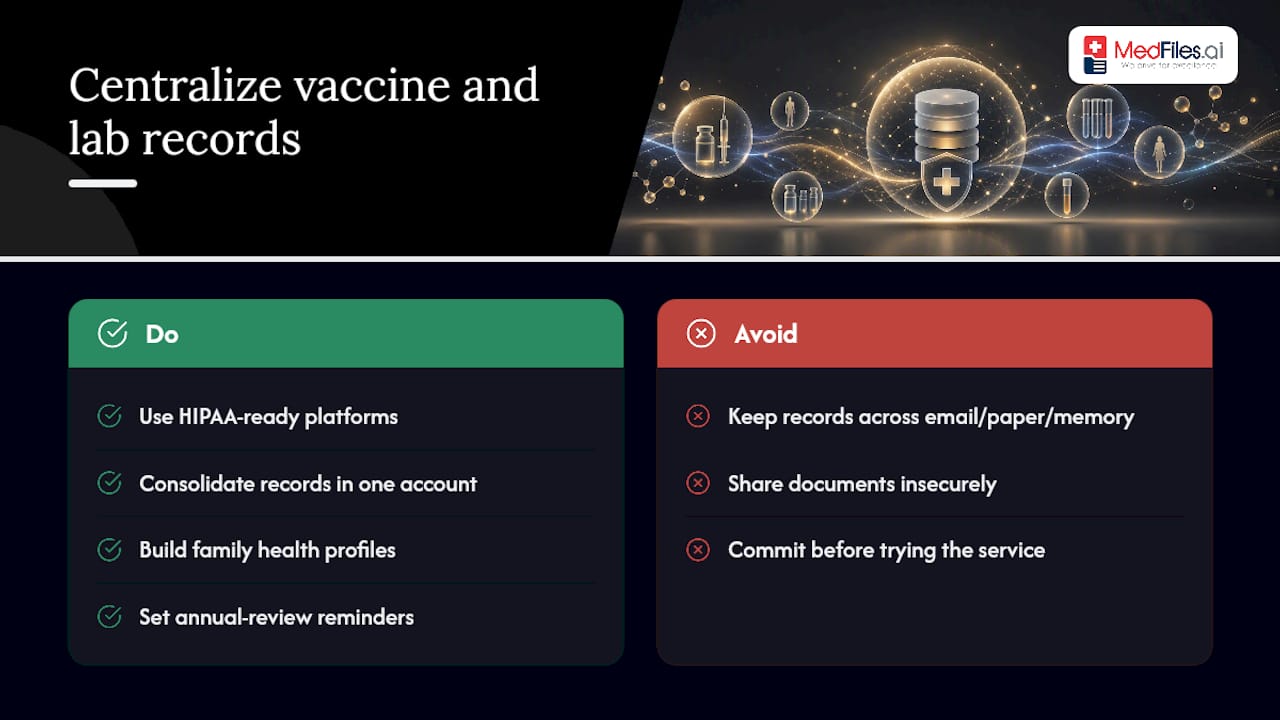
A checklist only works if you can find it when you need it, and most people can’t. Vaccine records live in one pediatrician’s file from a decade ago, lab results sit in a portal you forgot the password to, and your parent’s medication list exists only in their head. A central family medical record fixes this by putting one timeline in one place, for every person you’re responsible for.
What to check before trusting any tool with this information:
- HIPAA-ready infrastructure, not just a vague “secure” claim
- End-to-end encryption on stored documents
- The ability to grant read-only access to a provider without sharing your whole file
Pro Tip: Before your next appointment, export or print your organized records instead of trying to recall dates from memory in the exam room. Set an annual reminder to review the whole list, and share it with your provider ahead of the visit so they can prep too.
Does Insurance Actually Cover Preventive Care?
Most health plans cover preventive services at no cost to you, but only when the visit is coded as preventive and the service falls on an approved list. That list includes routine vaccines, most cancer screenings at guideline ages, annual wellness visits, and standard bloodwork tied to preventive intervals.
The catch is billing category. If your provider addresses a new symptom, orders a test to investigate a specific complaint, or treats an existing condition during what was scheduled as a preventive visit, part or all of that visit can shift to diagnostic billing, which usually means a copay or coinsurance applies. This isn’t a loophole insurers created to catch you off guard. It’s a coding rule: preventive care means checking for problems you don’t yet know about, and diagnostic care means investigating something you’ve already noticed.
Plans vary on specifics: age minimums for certain screenings, how often a service is covered “at no cost” (often once every 12 months), and whether out-of-network providers still qualify for preventive coverage. Before scheduling, a quick call to your insurer or a look at your plan’s preventive services list can save you a surprise bill. If you’re managing a chronic condition alongside preventive care, ask your provider directly whether a given visit will be billed as preventive, diagnostic, or both, so you’re not guessing after the fact.
Turning Your Checklist Into a Plan, Not a One-Time List
The habit that actually moves the needle: schedule your next preventive visit before you leave the current one. Don’t wait for a reminder card.
A workable 1 to 3 year roadmap for a midlife adult might look like this: annual flu shot and blood pressure check every visit, cholesterol every 4 to 6 years, colorectal screening once at 45 then per provider guidance, and a full review of the whole list with your provider every 12 months. Nothing here requires memorization. It requires one shared record that every family member can point to, so a screening doesn’t slip through simply because nobody remembered it was due.
— Team
Keep Every Vaccine Date and Lab Result In One Place
There are platforms that provide a single, secure home for records this checklist depends on: vaccine dates, lab results, medication history, and screening reports, consolidating documents from multiple sources.

Some platforms run on HIPAA-ready infrastructure with end-to-end encryption, keeping important records private while allowing instant access when needed. You can build a family health profile for every person you manage care for, set reminders around your annual review, and share a read-only copy with a new provider before you even sit down in the exam room using secure medical document sharing.
If your preventive checklist currently lives across old emails, paper folders, and memory, start with organizing your medical documents in one account. Medfiles offers a free tier with no credit card required, so you can see how it consolidates your family’s preventive care before committing to anything.
This article is general information, not a substitute for advice from a qualified doctor. Consult a qualified healthcare professional about your own circumstances before acting on anything here.